




Excavator Track Making Noise? Common Causes and What to Check
Summary: About blog: A guide to the sounds an excavator undercarriage can make. Covers squealing, grinding, clunking and clicking, what each can point to, how to find the source safely, and when to stop work.
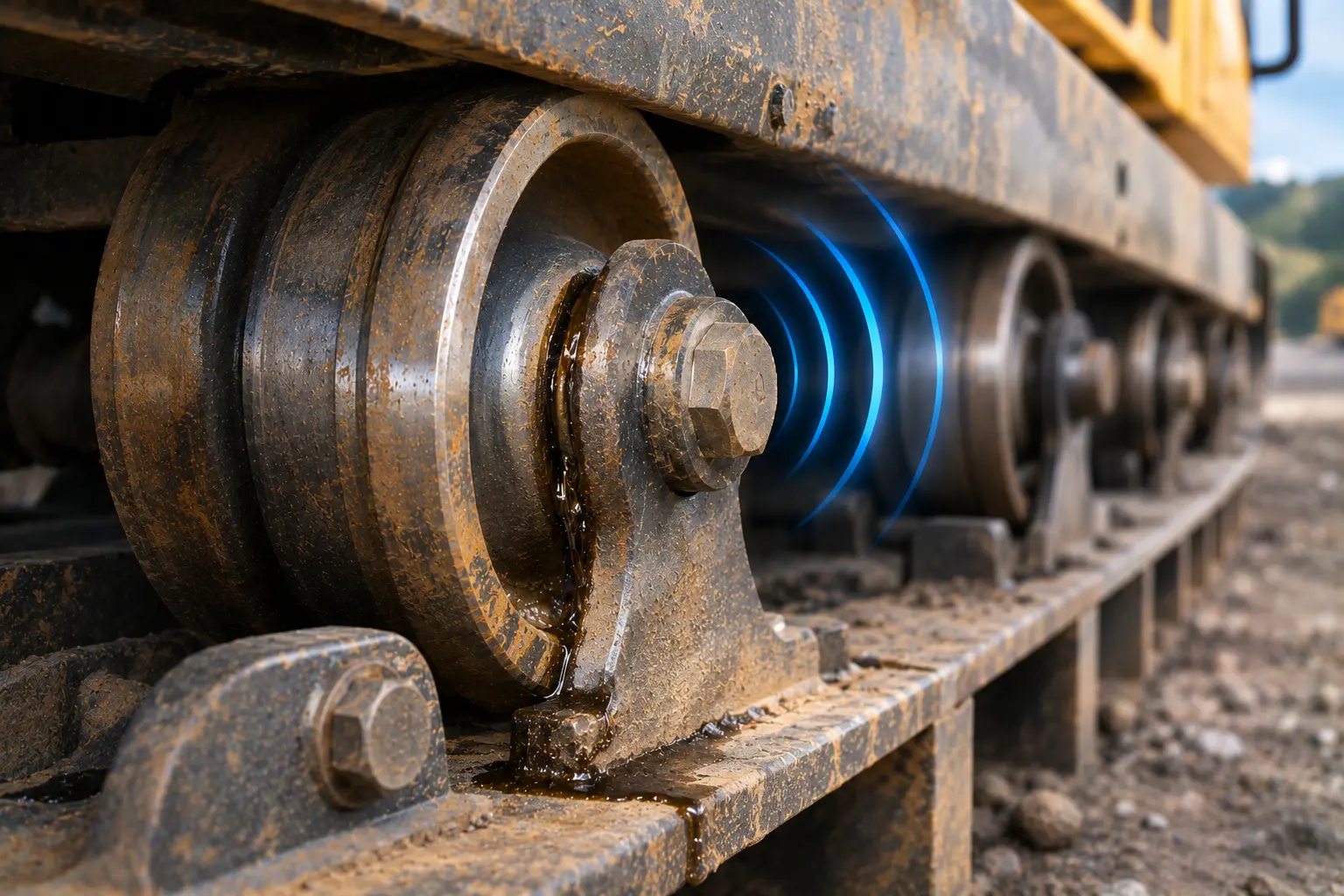
Operators know the sound of their machine. When a new noise appears from the tracks, it can be an early indication of a developing problem, even before other visible symptoms appear.
This guide helps you work out where an excavator track making noise is coming from. A sound alone cannot confirm a fault, so each one here is a reason to inspect, not a final answer.
1. Normal Noise and New Noise
Tracked machines are never silent. Steel on steel, chain links running over rollers, and the sprocket meshing with the bushings all make sound. That is the baseline.
The signal is a change. A squeal that was not there last week, a knock that appears under load, or a grinding noise as ground conditions dry out are all worth a look.
2. When the Noise Happens Tells You Where to Look
| When you hear it | Where to look first |
|---|---|
| Both directions, all the time | Rollers, idler and carrier rollers |
| Mainly in reverse | Sprocket and chain meshing |
| Only when turning | Track tension, link guides, idler flanges |
| More noticeable on dry ground | Dry joints, dust, debris and changing contact conditions |
| Under load or on slopes | Track hardware, guards and signs of uneven or side loading |
Make a note of when it happens before you begin. It saves time during the inspection.
3. Common Sounds and What They Can Point To
| Sound | What it can point to | What to check |
|---|---|---|
| High squeal | Dry contact between metal surfaces, often when the ground is dry | Joints and roller contact surfaces, any change after the ground dries |
| Grinding or scraping | A roller or idler that is not turning freely, or packed material | Evidence of a seized roller, such as flat spots, drag marks or abnormal heat, and any packed material in the frame |
| Rhythmic clicking | Something on the chain or a damaged roller turning in step with the track | Shoe bolts, a flat spot on a roller, a stone caught in the links |
| Clunk or knock | Loose tension, play in a part or a loose fastener | Track sag, play in rollers and the idler, loose bolts |
| Rattle | Loose guards or fasteners | Track guards, bolts and fittings |
These are patterns, not rules. The same sound can have more than one cause, which is why the checks below matter more than the guess.
4. How to Find the Source Safely
• Park on level ground, lower the attachment, switch off and make the machine safe before you go near the tracks.
• Let the undercarriage cool before touching any part of it.
• Look for oil at the roller and idler seals.
• Have a trained person verify roller movement using the procedure specified by the manufacturer. Do not place hands near the track or rollers, and keep observers clear whenever the machine is moving.
• Check for abnormal temperature differences using a safe method, preferably a non-contact temperature tool. Do not touch components that may be hot. A component that is much hotter than the others may have a failing seal or bearing.
• Have a trained technician check the rollers and idler for excessive play after the machine has been safely secured.
• Check the track sag, and clear mud and stones from the frame.
Never put hands between the track and the frame when the machine can move.
5. Noises That Come from Packing and Debris
Not every noise means a worn part. Stones, packed mud and debris can rub against the frame or the rollers and make the same sounds as a failing component.
Clean the undercarriage first. If the noise disappears after cleaning, debris or packing was likely contributing to it. Inspect the area for any damage before returning to normal operation. If it remains, you have eliminated one possible cause. The habits that prevent packing are covered in How to Extend Undercarriage Life: Operating Habits That Cut Downtime.
6. Seized Rollers and Worn Components
A roller that stops turning drags against the chain instead of rolling with it. It grinds, wears a flat spot and puts extra load on the parts around it. A seized roller should be inspected for seal failure, lubricant loss, bearing damage and tread wear.
Worn parts add play to the system. As the chain lengthens, the sprocket and chain no longer mesh cleanly, and the result can be knocking or scraping. To check the chain, read Track Chain Elongation: How to Measure It and What the Numbers Mean.
7. Loose Tension
A track that is too slack can knock against the frame or the idler as it moves. Track sag is one of the first checks to carry out after the machine has been safely parked. The method is in How Track Tension Works: Setting Excavator Track Sag Correctly.
8. Noise on Dry Ground
Many operators notice squeals as the ground dries out after rain. Dry dust, debris and changing contact conditions can make undercarriage noise more noticeable. Do not assume a new squeal is harmless simply because it appeared in dry weather.
If a squeal shows up with the weather, check the joints and rollers for dryness and the frame for packed dust. If the sound grows louder over several days, treat it as a warning and inspect rather than waiting.
9. Record the Noise
A technician can find the cause faster with a clear description. Before you call, note down the following:
• Which side of the machine the sound comes from.
• Whether it happens forward, in reverse or when turning.
• Whether it changes with load, speed or ground.
• When the noise started and the machine’s operating hours at that time.
• A short phone recording, if safe to take.
Those details often narrow the list of causes before the machine is even opened up.
10. When to Stop the Machine
• Oil is leaking from a roller or idler.
• A roller will not turn.
• The noise is loud, regular and getting worse.
• The track is wandering or looks about to come off.
• A component shows an abnormally high temperature compared with similar components when checked using a safe inspection method.
Running on can turn a small repair into a larger one. If the track comes off, see Why Does an Excavator Track Keep Coming Off? Causes and Fixes.
11. Parts for the Fix
Once you know the source, match the part to the machine. The current Tuffex catalogue lists 79 track rollers, 63 active carrier rollers and 67 idler assemblies, with dimensions and compatible-machine information shown where available.