




Tube vs Tubeless Off-Road Tyres: Which Suits Your Site?
Summary: About blog: Compares tube-type and tubeless off road tyres on puncture risk, heat, repair, rim fit and cost. Includes a decision table by site type and a short guide on how to choose tyres for a grader.
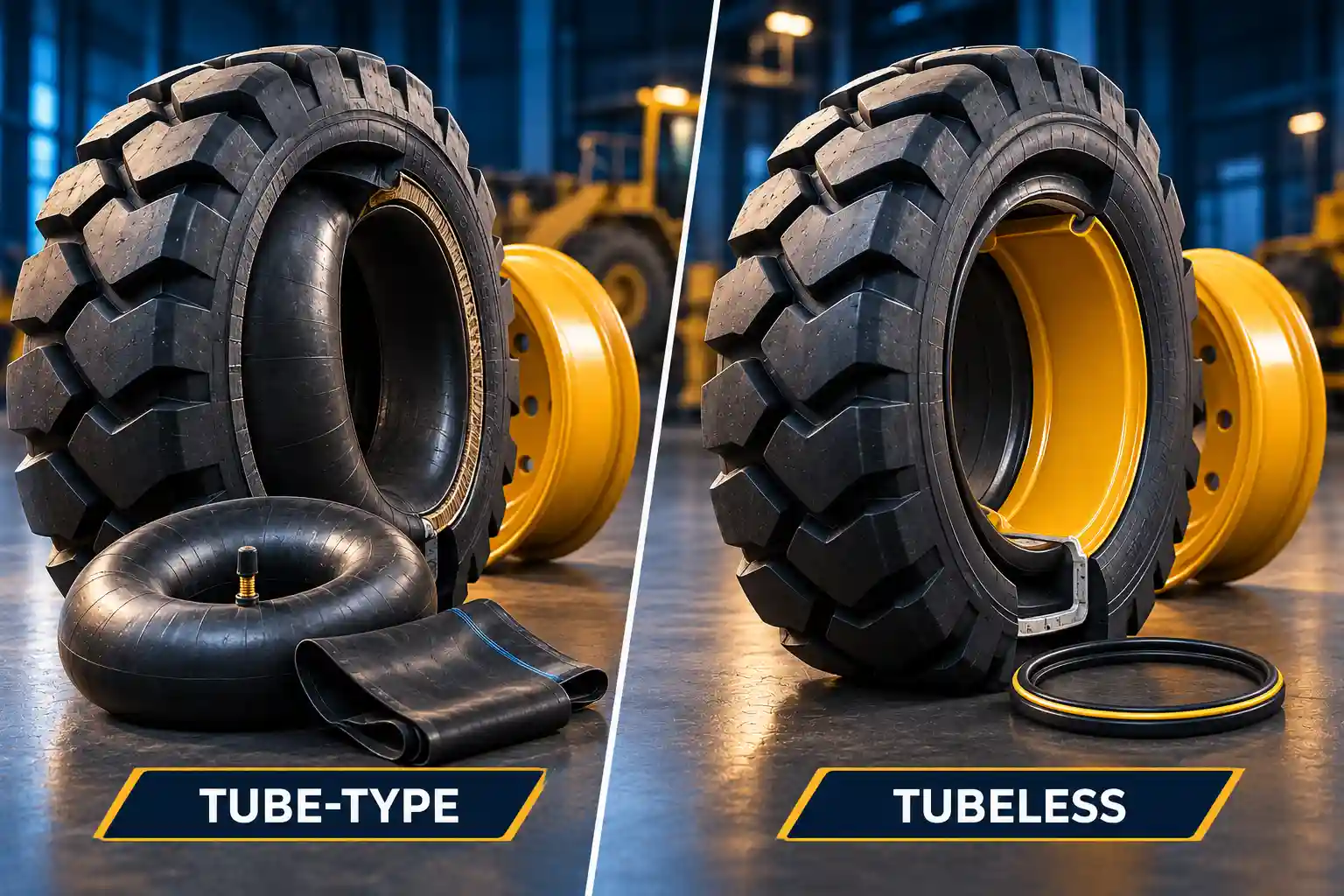
The pneumatic off-road tyres in the Tuffex range are available in tube-type and tubeless constructions. A tube-type tyre holds air in a separate inner tube and may also use a flap, depending on the tyre and rim assembly. A tubeless tyre holds air through the seal between the tyre and a compatible rim. Both are in wide use, and neither is better in every case.
The right choice depends on your rim, your ground and how quickly you need to get back to work. This guide compares tube vs tubeless off road tyres on the points that matter on site, so you can pick the best off road tyres for the job. For help reading sizes first, see our off road tyre size chart guide.
1. How Each Type Is Built
| Feature | Tube-type | Tubeless |
|---|---|---|
| Air held by | Inner tube, with a flap protecting it | The tyre and rim seal |
| Rim | Standard rim designed for tubes | Rim with a sealing surface, usually with an O-ring |
| Common additional components | Inner tube and, where required, a flap | An O-ring or another approved sealing component, depending on the rim |
The key point is the rim. Rim compatibility is the first consideration. A tubeless tyre requires an approved rim and sealing arrangement, while a tube-type assembly requires the correct tube, flap where applicable, rim and valve. Do not interchange the two systems unless the tyre and rim manufacturers approve the combination. So the rim often settles the question before preference does.
2. Puncture and Damage Risk
On rocky sites, cuts and punctures are the main cause of downtime. The two types handle them differently.
- A tube-type tyre can lose air quickly if the tube is pierced, because the tube is separate from the casing.
- A small puncture in a tubeless tyre may cause gradual air loss, while more severe tyre, bead or rim damage can cause rapid pressure loss.
- Either type can fail if a deep cut reaches the casing.
The tyre's own build matters as much as the type. Cut resistance, tread design and casing construction influence damage resistance. Ply rating primarily indicates load-carrying capability and should not be treated as a direct measure of puncture resistance.
3. Heat and Long Hauls
Heat builds up inside a tyre on long, loaded runs. A tubeless tyre has no tube to chafe against the casing, and that can help it run cooler. A tube-type tyre needs the tube, flap and rim to fit well, or friction adds to the heat.
On short, slow cycles like quarry loading, the difference is smaller. On long haul roads, it matters more.
4. Repair and Downtime
| Question | Tube-type | Tubeless |
|---|---|---|
| Common repair | Replace or patch the tube | Have the tyre and rim inspected; the approved repair depends on the location and extent of the damage |
| Skill needed | Fitting tube and flap correctly | Seating the tyre and checking the seal |
| Spare parts | Tube and flap | O-ring or seal |
| Downtime | Depends on the damage, available parts and fitting support | Depends on the damage, rim condition, seal and available fitting support |
Whichever you use, fitting large tyres and rims is heavy and risky. Use trained technicians and the right equipment.
5. Cost and Availability
Purchase and operating costs vary by tyre size, construction, brand, rim condition and site requirements. A tube-type assembly may require a tube and flap, while a tubeless assembly may require an O-ring or another approved seal. Compare the complete assembly and expected maintenance requirements rather than the tyre price alone.
6. Which Tyre Type Suits Your Site?
| Site or machine | Usually suits | Why |
|---|---|---|
| Quarry or mine with sharp rock | Tube-type or tubeless with strong ply | Strength and tread matter more than type |
| Wheel loader on matching rims | Tubeless | Sealed fit and cooler running |
| Grader or older machine with tube rims | Tube-type | Rims are made for it |
| Long haul tipper or truck | Radial, often tube-type with the right rim | Heat and load rating |
| Remote site with few spares | Whichever has the spares you can stock | Fast recovery |
Existing spare stock is useful, but it should not determine compatibility. Before changing tyre construction, confirm that the tyre, rim, valve and sealing arrangement are approved for use together.
The Tuffex range includes both. Most of the 18 tyres are tube-type and come with a tube and flap. The 23.5-25 20PR L3 loader tyre is also listed in a tubeless version with an O-ring.
7. How to Choose Tyres for Grader Work
If you want to know how to choose tyres for grader work, begin with the machine and the surface. Graders spend their day on gravel, soil and haul roads, and the tyres need grip and steady wear.
- Match the size to the rim, for example 13.00-24 or 14.00-24.
- Choose the ply rating for the load, such as 16PR or 20PR.
- Choose a grader tread pattern approved for the operating surface and duty cycle.
- Check whether the rim needs a tube and flap.
- Use compatible tyres of the same approved size, construction and pattern on each axle or wheel position, as specified by the machine manufacturer.
Tuffex lists grader tyres in 13.00-24 16PR and 14.00-24 in both 16PR and 20PR, all tube-type with a tube and flap.
8. Care That Applies to Both Types
Tyre type matters less than how the tyre is looked after. A few habits protect either style and cut downtime.
- Check pressure with a gauge when the tyres are cold, and follow the maker's guidance for the load.
- Look over the sidewalls and tread for cuts, bulges and embedded rock at the start of each shift.
- Keep the valve caps fitted so dirt does not get in.
- Remove stones lodged between the tread blocks, as they can cut into the casing.
- Rotate or swap tyres where the machine allows, to even out wear.
Incorrect inflation pressure, excessive load or excessive speed can cause heat build-up, irregular wear and premature tyre failure. Check pressure regularly and follow the machine and tyre manufacturer’s load and inflation guidance.
9. Before You Decide: A Short Checklist
- Check what type of rim the machine has.
- Note the size, ply rating and tread code on the old tyre.
- Think about ground, haul distance and spare stock.
- Make sure a trained technician fits it.
- Confirm the match with your supplier.