




Why Does an Excavator Track Keep Coming Off? Causes and Fixes
Summary: About blog: Explains the most common reasons an excavator track comes off, how to tell which cause applies to your machine, and when a repair or a part replacement is the better call. Includes a diagnosis table, safe re-fitting guidance and a prevention checklist.
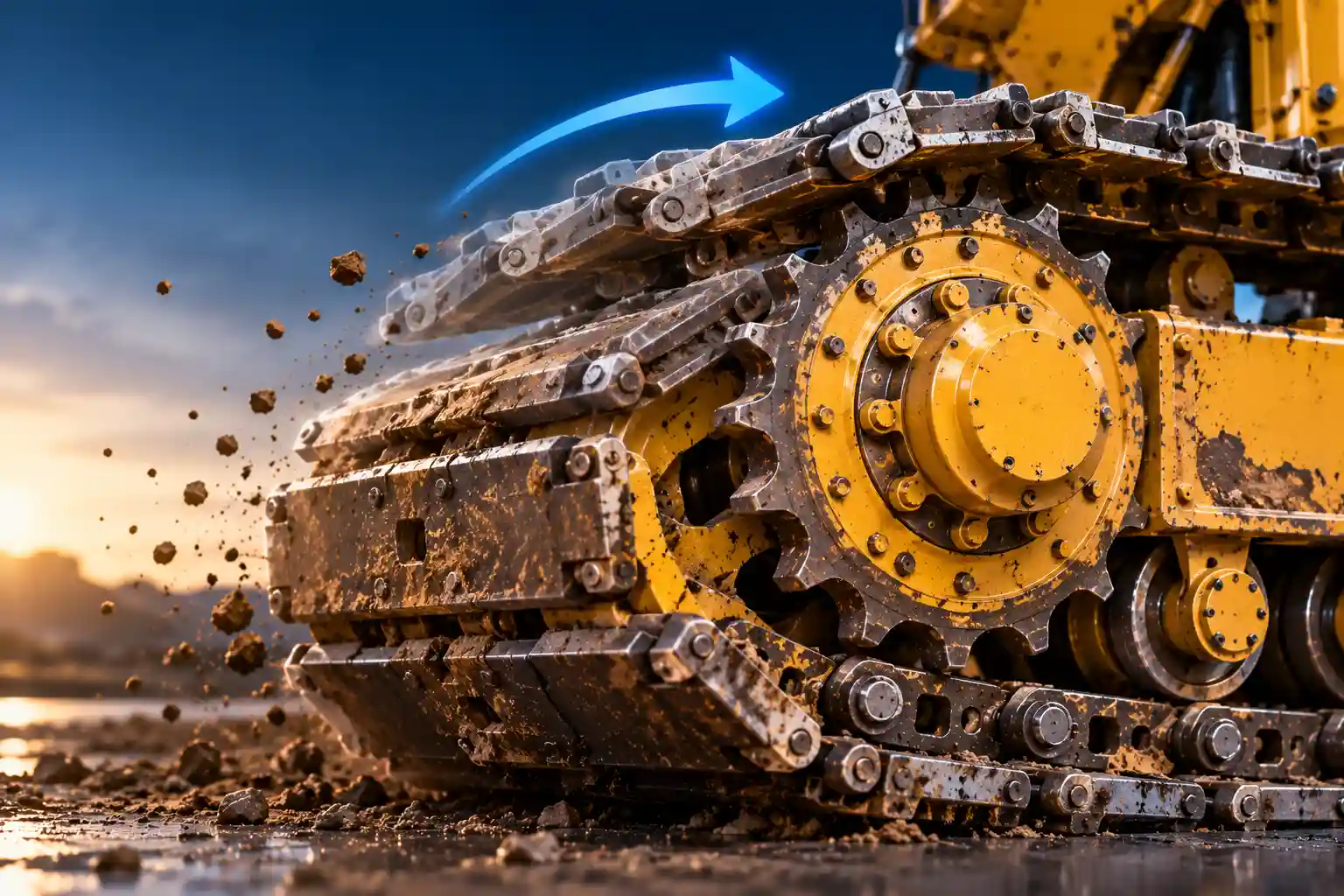
A track that jumps off once can be bad luck. A track that keeps coming off is telling you something is worn, loose or out of line. Each time it happens, the machine can suffer significant downtime, while the chain, rollers and idler may sustain additional damage.
This guide covers the most common causes, how to match the symptoms to the affected components, and when a repair may be sufficient. It is written for owners, operators and workshop teams who want to fix the cause rather than just put the track back on.
1. The Short Answer
A track stays on because four things work together: correct tension, a straight path, guiding surfaces in good shape, and a chain that still matches its drive parts. When any of these fails, the chain can slip sideways off the idler or the rollers. Most cases come down to one of the causes below.
2. Common Causes and What to Look For
| Cause | What you will see | Where to look |
|---|---|---|
| Track too loose | Excess sag, chain slaps the rollers, comes off when turning | Track sag and the adjuster |
| Worn idler flanges | Thin or rounded guiding flanges, chain rides sideways | Front idler |
| Worn rollers | Flat or thin roller flanges, uneven wear on one side | Track and carrier rollers |
| Stretched chain | Chain looks long, jumps on the sprocket | Pitch against OEM limit |
| Misaligned frame | Wear on one side only, track wanders | Track frame and idler centring |
| Packed debris | Mud or rock jammed in the frame, track tight then loose | Sprocket, rollers and frame |
| Rough operation | Track comes off after side-slope work or sharp turns | Operating habits |
3. Loose Tension and the Tensioner
Incorrect track tension is one of the most common reasons a track comes off. When the track hangs too low, a sharp turn or a side load can push the chain off the idler. Check sag against the OEM figure for your model.
If the track keeps going slack after you tighten it, the problem is not the tension setting. It is usually a leaking adjuster cylinder, a faulty grease valve or a weak recoil spring. This is where excavator track tensioner repair comes in. Replacing the cylinder seals or the valve is far cheaper than another recovery.
Grease in the adjuster is under very high pressure. Never loosen the valve beyond what the OEM manual allows, and keep your body out of line with it.
4. Worn Idler and Roller Guides
The idler and the rollers have flanges that hold the chain in line. As these wear down, the chain gets room to move sideways. A thin idler flange is a clear warning, and so is a flat spot on a roller.
Excavator idler wheel repair works when the damage is limited to the tread and flange surface and the shell is sound. If the flange is nearly gone, or the shell is cracked, replace it. Our guide on front and rear idlers explains how to tell the difference.
For rollers, look at both the flange and the tread. A seized roller does not rotate freely and may contribute to uneven chain movement and wear.
5. Stretched Chain and Worn Drive Parts
As pins and bushings wear, the chain stretches. A stretched chain no longer sits properly on the sprocket, and it can lift off the teeth or wander on the idler. Tightening only hides this for a short while.
Excavator chain repair is limited. Individual links, pins and bushings can sometimes be pressed and reused, but a chain that is long overall should be replaced together with the sprocket. See our sprocket and segment group guide for the reasons.
6. Frame Alignment and Operating Habits
If one side keeps losing its track while the other is fine, check the frame. A bent track frame or an idler that does not sit in the centre will push the chain off again and again, and a new part will not cure it.
Operating habits matter too:
• Avoid sharp pivot turns on rough ground.
• Work across slopes as little as possible.
• Do not let mud and rock pack into the undercarriage.
• Keep the track guards properly fitted and maintained, where provided.
• Do not run the machine with loose or missing shoe bolts.
7. How to Put the Track Back On Safely
Track re-fitting is heavy work, should be carried out by trained technicians and should follow the OEM manual. In general:
• Park on firm, level ground and make sure the machine cannot move.
• Release tension slowly and as the manual describes.
• Use proper lifting aids and keep hands clear of pinch points.
• Seat the chain on the idler and the sprocket before re-tensioning.
• Check sag, then travel a short distance and recheck.
Do not stop there. Before the machine returns to work, find out why the track came off. Otherwise the same excavator breakdown will repeat.
8. Repair or Replace?
| Finding | Usual decision |
|---|---|
| Slack returns after tightening | Inspect and service the tensioner |
| Surface wear on idler, shell sound | Repair or rebuild the idler |
| Idler flange thin or shell cracked | Replace the idler |
| Chain pitch beyond limit | Replace the chain and inspect the sprocket; replace it if also beyond its wear limit |
| Roller seized or flat | Replace the roller |
| Frame bent | Repair the frame before fitting parts |
Diagnose the problem systematically, beginning with track tension and the adjuster, followed by the idler and rollers, the chain and drive components, and finally the track-frame alignment.
9. Parts for the Fix
Tuffex lists 67 idler assemblies, 79 track rollers, 63 carrier rollers, 54 sprockets and 46 track link assemblies, with fitment across 12 OEMs. Dimensions and specifications are provided on the product listings where available, helping buyers compare a replacement with the removed part. If you are replacing more than one part, ask for a set so that the new parts wear evenly. Replace the worn part that caused the problem first, then check its neighbours for wear before the machine goes back to work. That one extra check often prevents a repeat stop.