




Why Is an Excavator Track Slipping? Sprocket, Chain and Tension Checks
Summary: About blog: Explains why an excavator track slips or skips, how to check the sprocket, track chain and tension in the right order, and which problems point to the final drive or the shoes instead. Includes a quick check table and a simple service routine.
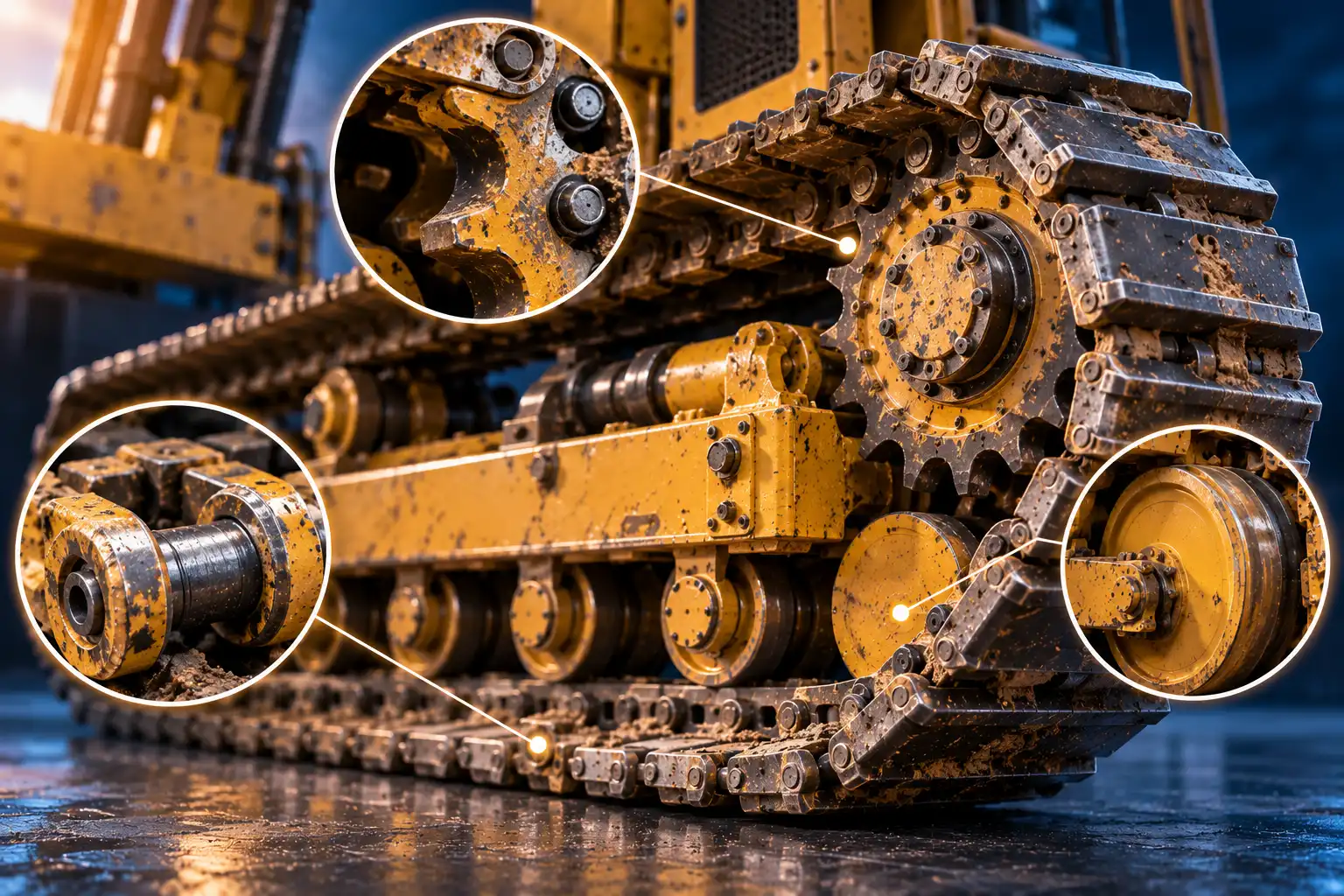
When an excavator track slips, the machine feels weak. It travels slowly, the track ratchets or jumps under load, and you hear a clicking or banging from the rear of the frame. It rarely happens without warning, and ignoring it can turn a small wear problem into a full excavator breakdown.
This guide helps you work through the causes in a sensible order. If you are asking why is my excavator track slipping, start with the three checks below. These checks provide a practical starting point before parts are repaired or replaced.
1. Slipping or Coming Off: Know the Difference
Slipping means the track stays on the frame but does not grip or drive properly. The chain skips over the sprocket teeth, or the machine loses traction on the ground. A track that comes off is a different failure, and our guide on tracks that keep coming off covers it. The two problems share some causes, but the checks differ.
2. The Three Checks, in Order
| Check | What to look at | What it tells you |
|---|---|---|
| 1. Tension | Track sag at the middle of the frame | Loose track skips, over-tight track strains parts |
| 2. Sprocket | Tooth shape and depth | Hooked or thin teeth cannot hold the chain |
| 3. Track chain | Pitch and bushing wear | A stretched chain no longer meets the teeth |
Checking them in this order provides a practical way to narrow down the cause. Tension takes a few minutes and is the easiest fix, while the sprocket and chain need a closer look.
3. Tension: Too Loose or Too Tight
A loose track lets the chain ride up on the sprocket teeth. Under load it can jump a tooth, and you feel a thump through the machine. Check the sag against the OEM figure for your model, and adjust only as the manual describes.
A track that is too tight causes a different problem. It increases the load on the chain, sprocket, idler and rollers and can accelerate undercarriage wear.
If the track will not hold tension, the tensioner may be leaking. Our idler guide explains how the adjuster and recoil spring work.
4. Worn Sprocket Teeth
The sprocket is the drive wheel. Its teeth push against the bushings of the track chain, and over time they wear thin and take a hooked shape. A worn tooth cannot hold the bushing under load, so the chain slips over it.
Signs include teeth that look pointed or sharp, a chain that sits deep between the teeth, and a clicking noise when you travel uphill or under load. On large machines the toothed rim is made in segments, and the segment set or group can be replaced without replacing the hub.
5. A Stretched Excavator Track Chain
An excavator track chain stretches as pins and bushings wear. The distance between bushings, called pitch, grows. A chain with a longer pitch no longer lines up with sprocket teeth, even when the teeth are in good shape.
Measure the pitch across a set number of links and compare it to the OEM limit. A chain over the limit will keep slipping, however tight you set it.
Track-chain repair options depend on the chain design, its measured wear and the manufacturer’s recommendations. Individual links, pins or bushings may sometimes be serviced by a qualified track-repair facility. If the chain has reached its wear limit, replace it and inspect the sprocket, replacing the sprocket as well if its tooth profile is beyond the specified limit.
6. When the Cause Is Not the Drive Parts
Sometimes the track chain and sprocket are fine. Check these before you order parts:
• Worn shoes: Flat grousers cannot grip soft or wet ground, so the machine spins instead of moving.
• Mud and debris: Packed material between the sprocket and chain stops them meshing.
• Weak travel power: A final-drive or hydraulic fault can feel like track slipping. A fault affecting one final drive may slow one side, while a wider hydraulic-system problem may affect both tracks.
• Wrong shoe type: Narrow shoes sink on soft ground and slip.
If only one side is slow, have the components on that side inspected. If both sides are weak, ask a trained technician to check the hydraulic and travel-drive systems.
Many owners ask whether the problem started suddenly. If the slipping appeared after a long stretch of heavy work on abrasive ground, wear is the likely cause. If it appeared after a recent adjustment or a track re-fit, check the tension and seating first.
7. Habits That Make Slipping Worse
• Travelling uphill with a slack track.
• Working in deep mud without cleaning the frame afterwards.
• Pushing hard on one track while the other is stuck.
• Delaying the sprocket and chain check until the machine is already struggling.
Better operating and cleaning practices can reduce unnecessary wear on the drive components.
8. A Simple Excavator Service Routine
Regular excavator service catches slipping before it starts. A good routine includes:
• Check track sag at the start of each shift.
• Clean mud and debris from the sprocket, rollers and frame.
• Inspect sprocket teeth every service interval.
• Measure chain pitch at the intervals your OEM recommends.
• Look for leaks at the idler and adjuster.
• Record findings and hours so wear trends are visible.
9. Repair or Replace?
| Finding | Usual decision |
|---|---|
| Track slightly loose | Adjust tension and recheck |
| Tensioner leaks or will not hold | Inspect and service the tensioner |
| Sprocket teeth hooked or thin | Replace sprocket or segments |
| Chain over its pitch limit | Replace the chain and inspect the sprocket; replace it if also beyond its wear limit |
| Shoes worn flat | Replace shoes |
| Both sides weak | Check hydraulics and final drives |
Diagnose the problem systematically, beginning with track tension and then checking the sprocket, chain, shoes and travel-drive system. Replace the chain and sprocket together when measurements show that both have reached their wear limits.
10. Parts to Fix Slipping
Tuffex lists 54 sprockets, 46 track link assemblies and 47 track shoes, with fitment across 11 OEMs. Dimensions such as tooth count, link pitch and shoe width are provided on the product listings where available, helping buyers compare a replacement with the removed part. For example, the Berco sprocket for the 336 F L lists Z=23, and the 320D L lists Z=21.