




How Track Tension Works: Setting Excavator Track Sag Correctly
Summary: About blog: A practical guide to excavator track tension. Covers how the tensioning system holds the chain, how to measure track sag, how to adjust it safely, and how ground conditions change the setting during a shift.
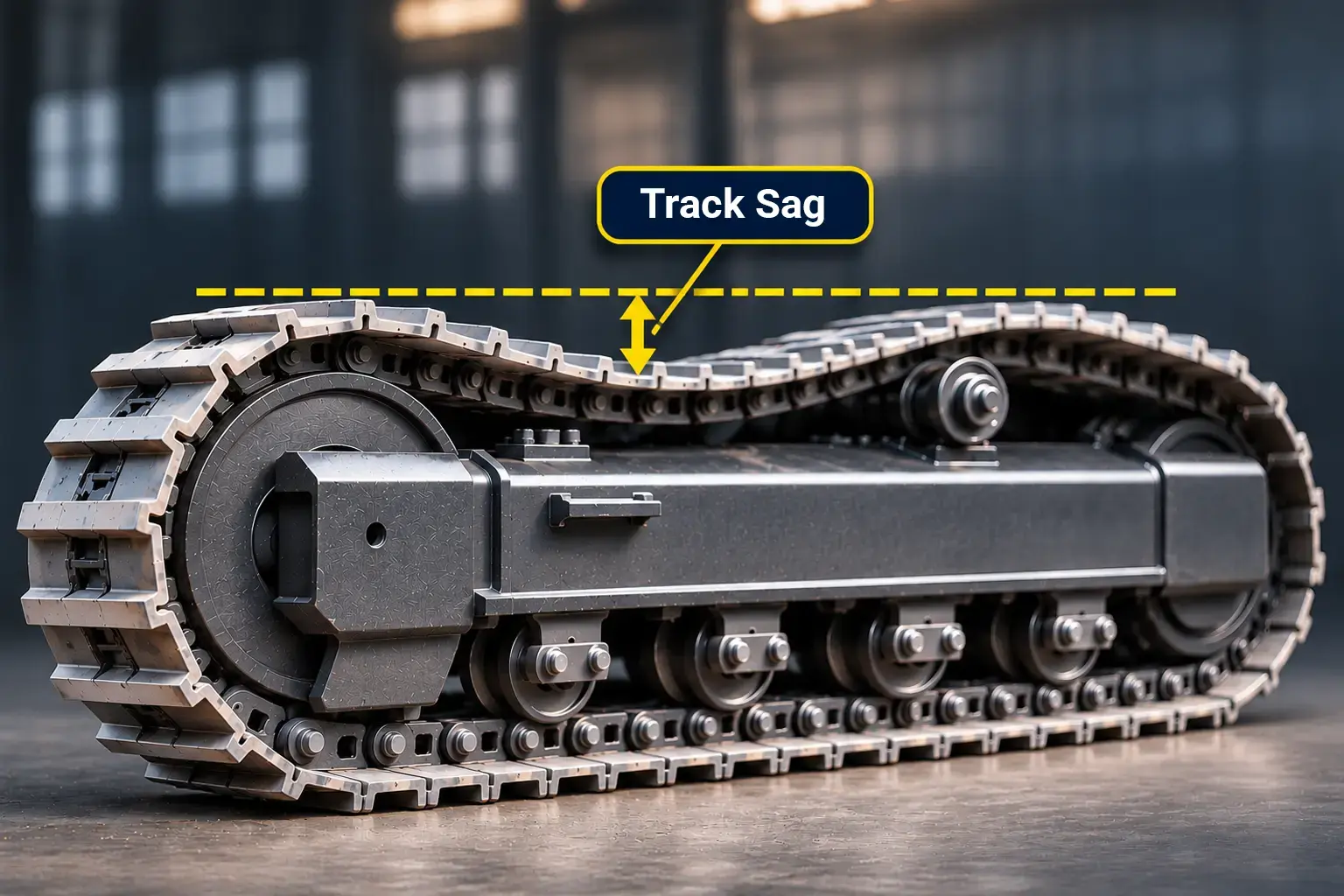
Of everything an operator can control on the undercarriage, track tension has a major effect on undercarriage wear. It costs nothing to check and takes a few minutes. Correct track tension helps reduce undercarriage wear. A track that is set wrong wears the chain, the sprocket, the idler and the rollers all at once.
This guide explains how excavator track tension works, how to measure track sag, and how to adjust it without hurting yourself or the machine.
1. What Track Tension Means
Track tension is how tight the chain sits around the sprocket, the idler and the rollers. You judge it by track sag, which is the amount the upper part of the chain droops between the carrier roller and the idler.
Some sag is normal and needed. A chain with no slack at all is under heavy load all the time, even when the machine is parked. A chain with too much slack can wander off the guides.
| Setting | What happens |
|---|---|
| Too tight | Higher load on bushings, sprocket teeth, idler and rollers. More power and fuel used. Faster wear on everything the chain touches. |
| Correct | Chain remains properly guided, meshes cleanly with the sprocket and avoids unnecessary tension-related wear. |
| Too loose | Chain slaps the frame, bounces during travel and grading, and can come off the idler. |
2. How the Tensioning System Works
Three parts work together at the front of the track frame:
• The idler, which the chain wraps around at the front.
• The recoil spring, which pushes the idler forward and absorbs shock when the track hits an obstacle.
• The adjuster, a grease cylinder that sets how far forward the idler sits.
Pumping grease into the adjuster pushes the idler forward and tightens the track. Letting grease out lets the idler move back and loosens the track. For a closer look at how each part works and wears, read Front Idler vs Rear Idler: Function, Position & Signs of Wear.
3. How to Measure Track Sag
Measure on level ground, with the track clean. The following is a common measurement method, but the exact procedure, measurement point and permitted sag must come from the machine’s manual.
• Drive the machine forward slowly and stop it with a track pin centred over the carrier roller.
• Lay a straightedge or tight string along the top of the shoes, from the carrier roller to the idler.
• Measure the gap between the straightedge and the shoe at the lowest point of the sag.
• Compare the figure with the OEM value for your model and track type.
Measure both sides. Tracks on the same machine can differ, especially when the ground is uneven or one side is packed with mud.
Figures differ between manufacturers, so the OEM figure for your machine is the only one to use.
4. How to Adjust the Track Safely
Tightening
Add grease through the fitting on the adjuster until the sag matches the OEM figure. Then run the machine forward and back a short distance to even out the pressure, and measure again.
Loosening
Open the relief valve slowly, as the manual describes, and let grease out until the sag is right. Close the valve and recheck.
The grease in the adjuster is under high pressure, especially when the track is tight. Do not open the valve further than the manual allows, and keep your body out of line with it. The fitting is also not a lube point, so do not pump until it stops. If the valve will not release, or the cylinder keeps losing grease, ask a trained technician to look at it.
5. Ground Conditions Change the Setting
Material packed into the undercarriage can change the effective track tension during operation. Mud, clay and sand pack in between the links, the rollers and the sprocket and push the chain tighter. The same track that measured correctly in the yard can become overtightened after a morning in wet clay.
• Clean the undercarriage at the end of each shift, or more often in wet or sticky ground.
• Recheck sag after working in a new type of ground.
• Follow the manufacturer’s procedure for packed conditions. Some machines should be cleaned before measurement, while some manuals specify checking tension under the same packed conditions in which the machine operates.
Packed material can increase effective track tension and accelerate wear, so check the undercarriage more frequently in these conditions.
6. Common Mistakes
| Mistake | What it causes | Better practice |
|---|---|---|
| Measuring on a slope | Wrong reading | Park on level ground |
| Measuring with the pin off-centre | Wrong sag value | Stop with a pin over the carrier roller |
| Adjusting before cleaning | Track ends up too loose once the packing is cleared | Clean first, then measure |
| Checking one side only | One track runs tight | Measure and set both sides |
| Pumping grease until the adjuster stops | Over-tight track | Stop at the OEM figure |
7. When the Setting Will Not Hold
If the track keeps going slack after you tighten it, tension is not the real problem. Possible causes include a leaking adjuster cylinder or seal, a faulty grease valve, a damaged recoil mechanism or excessive wear in the track chain. Have the system inspected before continuing to add grease or operate with a loose track.
To work out the symptoms of a loose track, read Why Is an Excavator Track Slipping? Sprocket, Chain and Tension Checks. If the track has already come off, Why Does an Excavator Track Keep Coming Off? Causes and Fixes covers the causes and the safe way to refit it.
8. Record Your Readings
A single reading tells you little. A series of readings shows a trend. Write down the date, the hours and the sag on each side every time you measure. If the track needs adjusting more often than before, that may indicate chain wear, leakage from the adjuster or another problem in the tensioning system, not a reason to keep adding grease.
The current Tuffex catalogue lists 67 idler assemblies and 46 track link assemblies, with dimensions on the listings where available. If a worn idler or chain is the reason the track will not hold its setting, match the new part to the old one before you order.