




Mining vs Construction Duty: How Site Type Changes Your Wear-Parts Choice
Summary: About blog: A guide to mining vs construction duty and what it means for wear parts. Compares hours, ground and impact, then shows how site type affects the choice of undercarriage tier, cutting edge material, tyres and planning routine.
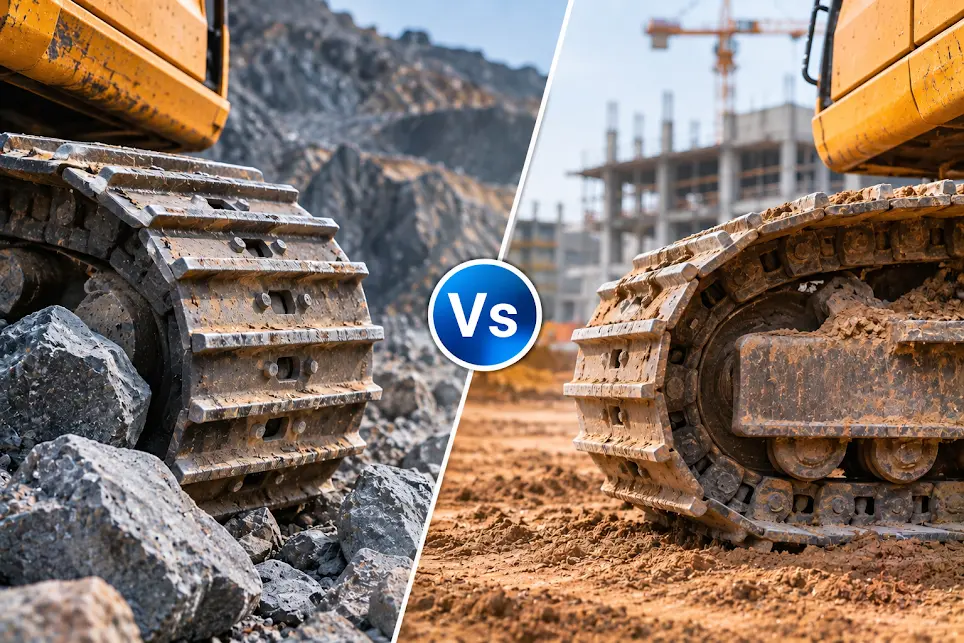
Two sites can run the same model of excavator and need very different parts. One is a quarry that runs all day on blasted rock. The other is a road job with mixed soil, a few weeks of rock and long gaps between tasks.
The machine is the same. The duty is not. This guide compares mining vs construction duty and shows how site type should shape your wear-parts choice, so you can match the parts to the machine’s operating conditions and site priorities.
1. What Duty Means
Duty is the sum of what the machine does and where it does it. It covers how many hours it runs, what ground it works on, how hard the ground hits back and how much stopping time the site can tolerate.
Parts do not wear by the calendar. They wear by duty. That is why a part that lasts well on one site can be a poor choice on another.
2. Mining and Construction at a Glance
| Factor | Mining and quarry, typically | Construction and infrastructure, typically |
|---|---|---|
| Running hours | Long, continuous shifts | Mixed, with stop-start periods |
| Ground | Abrasive material and blasted rock | Varied soil, clay, gravel and some rock |
| Impact | High on rock-loading work | Changes from job to job |
| Downtime tolerance | Low, because output depends on the machine | Depends on the project stage |
| Main cost measure | Cost per operating hour | Project uptime and cost per job |
| Parts need | Long life in steady wear | Flexibility across varied work |
Real sites vary, so treat this as a guide. A busy infrastructure project can run as hard as a small mine.
3. Impact and Abrasion: Two Kinds of Damage
Duty damages parts in two main ways. Abrasion is the slow grinding of sand, grit and sharp aggregate. Impact is the sudden shock of hard rock, ripping and heavy pushing.
Abrasive ground wears pins, bushings, rollers and edges steadily. Repeated or severe impact can crack or bend parts and contribute to fasteners becoming loose. A site can have both, but one usually leads. Knowing which one leads on your site tells you what to inspect first and what to build the parts list around.
4. What Mining Duty Asks of Parts
Mining and quarry work often involves long, repetitive shifts in abrasive or high-impact conditions. Regular measurements can make wear trends easier to track, although actual wear still varies with the material, machine and operating practices.
That favours parts built for long life, and it makes planning easier. When wear is steady, the replacement date can be forecast from measurements. For ground-by-ground detail, see Terrain and Undercarriage Wear: Rock, Sand, Mud and Slopes Compared.
- Choose longer-life parts where hours are high, because each replacement stop costs production.
- Consider stocking frequently replaced parts, since a missing tooth or badly worn edge can reduce productivity and may damage the surrounding components.
- Measure wear on a schedule and plan replacements into planned stops.
5. What Construction Duty Asks of Parts
Construction sites change. A machine might dig soft ground one week and break rock the next, then move to another site. Duty is less predictable, and it is often spread across mixed machines of different makes.
That favours parts that suit a range of conditions and supplier coverage across many models. It also means more attention to the ground each job, because the right choice for one phase may not suit the next.
6. Choosing the Part Tier by Duty
Aftermarket parts come in tiers, and the right tier depends on how hard the machine works. The tiers are explained in OEM vs Aftermarket Excavator Parts: Buyer's Guide.
| Duty | Tier approach | Reason |
|---|---|---|
| High hours, abrasive ground | Premium range with demonstrated suitability for high-hour, abrasive duty | Each stop is costly, so expected service life and cost per operating hour become more important |
| Mixed work, moderate hours | Premium or value tier, compared on cost per hour | Both can suit, depending on hours per year |
| Light or occasional use | Value tier | Lower cost per part suits lower hours |
Warranty cover varies by brand and part type. Check the warranty shown on the individual Tuffex product listing and compare it with the machine’s annual operating hours and application.
7. Cutting Edges and Wear Plates by Duty
Material choice follows hours and ground. Heat-treated boron steel generally offers higher hardness and wear resistance for abrasive applications. Carbon steel may be easier to weld, repair or modify, depending on its grade and the manufacturer’s instructions. The full comparison is in
Boron Steel vs Carbon Steel Wear Plates: Which Material Suits Your Bucket?
Many Tuffex edges, end bits and overlays are listed in both materials, so you can match the choice to the site. Check the thickness and hole pattern too, since material is only one part of the match.
8. Tyres by Duty
Tyres show the difference quickly. Rock and quarry work may require cut-resistant construction and a tread pattern suited to abrasive or high-impact conditions. Mixed construction may require a more versatile pattern. Confirm the tyre size against the machine specification, then select the load rating, tread pattern and construction for the load, speed and operating conditions.
9. How Planning Differs
- Mining: forecast from wear trends, and schedule parts into planned stops.
- Construction: plan per job, and review the plan whenever the ground changes.
- Both: record hours and wear at every service, so each site builds its own data.
For the planning method, read Planning Wear-Part Replacements: Which Excavator Parts Wear Fastest.
10. Five Questions to Ask Before You Choose
- How many hours does the machine run per year?
- How abrasive is the ground, and how often does it hit rock?
- What does an hour of downtime cost the site?
- Can the part be replaced in a planned stop?
- Does the supplier cover every model in the fleet?
The answers show which kind of duty you run, and which tier and material suit it.
11. When One Company Runs Both
Many contractors run mining-style work on one site and general construction on another. The temptation is to buy one standard part for everything. That can overspend on the light sites or under-serve the hard ones.
A better approach is to group machines by the duty they actually see. Give the hard-duty group the longer-life parts and the planned stops. Give the lighter group a simpler plan. Review the groups periodically and whenever a machine moves to a site with materially different operating conditions.