




Terrain and Undercarriage Wear: Rock, Sand, Mud and Slopes Compared
Summary: About blog: A ground-by-ground look at terrain and undercarriage wear. Covers how rock, sand, mud and slopes each damage the undercarriage, which parts show it first, and how to match track shoes to the job.
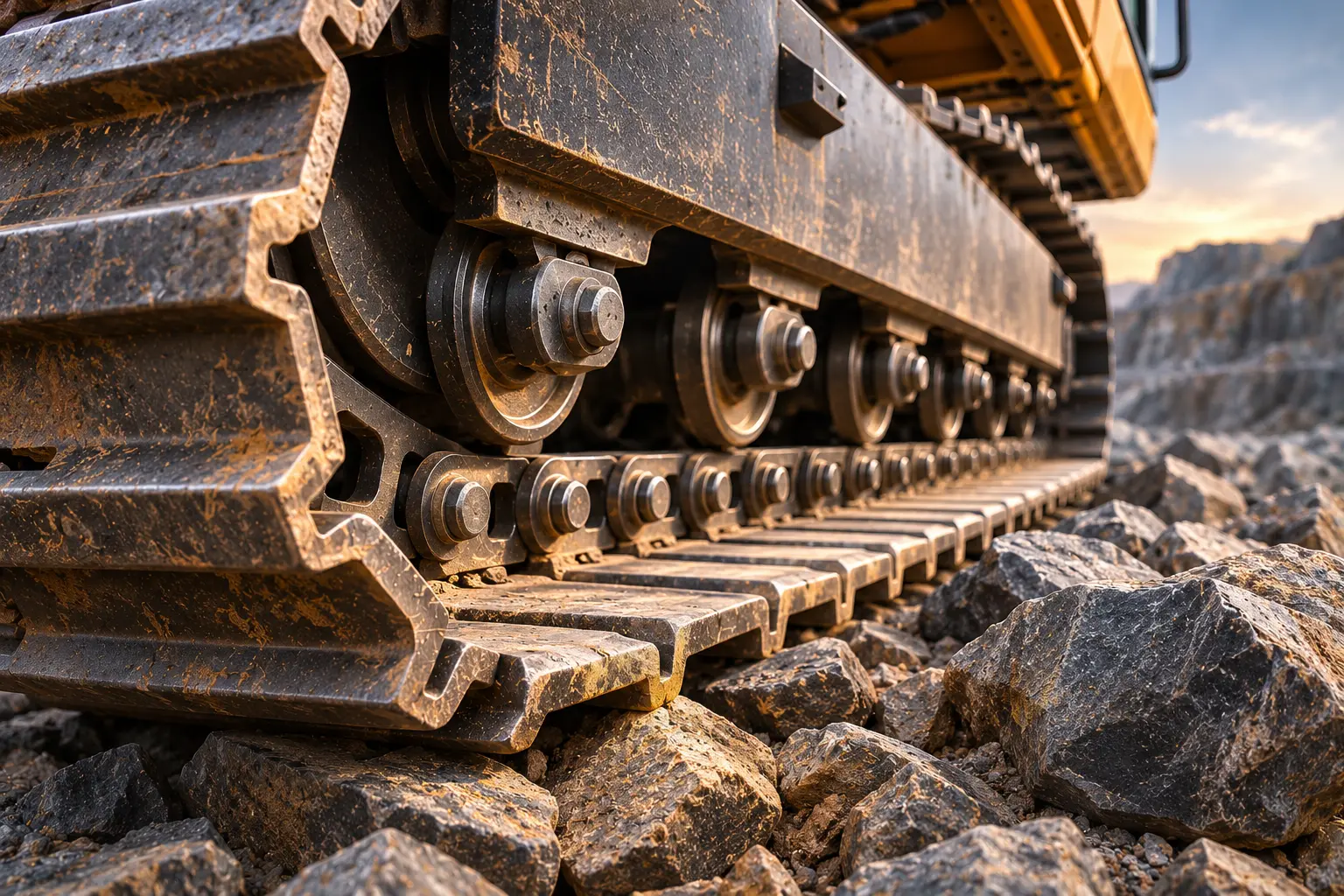
Two excavators of the same model can finish a year with very different undercarriages. One has barely changed. The other needs a full rebuild. Ground conditions can be a major reason for this difference, along with operating habits, maintenance and machine configuration.
Each type of ground attacks the undercarriage in its own way. Knowing which one you work on tells you what to inspect first, and which parts to plan for. This guide compares rock, sand, mud and slopes. For the full list of parts involved, see Excavator Undercarriage Parts: Complete Guide to Components.
1. Why Ground Conditions Matter Alongside Operating Hours
Machine hours say how long a machine has worked. They do not say what it worked on. An hour on soft loam and an hour in a quarry put very different loads on the same chain and rollers.
That is why fleets that track undercarriage wear by site, and not only by hours, can predict replacements better. The table below shows the pattern.
2. Terrain Wear at a Glance
| Ground | Main kind of wear | Parts that suffer most | What to watch for |
|---|---|---|---|
| Rock | Impact, shock and abrasion | Track shoes, links, rollers | Cracks, bent shoes, loose bolts |
| Sand and grit | Abrasion | Pins, bushings, sprocket teeth, roller rims | Steady loss of metal, growing chain pitch |
| Mud and clay | Packing | Rollers, sprocket, idler, tension | Rollers that stop turning, track getting tight |
| Slopes | Side loading | Roller flanges, link sides, sprocket sides | Wear on one side of the parts |
3. Rock: Hard Knocks
Rocky ground subjects undercarriage parts to repeated impact, bending and abrasive wear. Over time, this can produce cracks, bent plates and worn contact surfaces.
Wide shoes are more prone to bending on rock, so narrower shoes are often chosen for rocky work. Check shoes for cracks and bending, and inspect the track hardware at the intervals specified by the manufacturer and check for loose or damaged fasteners.
4. Sand and Grit: Slow Grinding
Sand works like sandpaper. It works around the links, bushings, sprocket teeth and roller contact surfaces. Each movement grinds away a little metal.
The damage is gradual, so it is easy to miss. The sign is chain pitch growing faster than expected. To measure it, read Track Chain Elongation: How to Measure It and What the Numbers Mean. Parts designed for abrasive applications may provide a lower cost per operating hour, depending on the site and utilisation.
5. Mud and Clay: Packing and Dragging
Mud is soft, but it causes its own problems. It packs between the links, the rollers and the sprocket. Packed material can set hard, and in cold weather it can freeze. A roller that cannot turn drags against the chain and wears flat.
Packing also tightens the track during the shift. The tension steps for this are in How Track Tension Works: Setting Excavator Track Sag Correctly. Clearing the mud at the end of the day, while it is still soft, is far easier than chipping it off the next morning.
Wide shoes help here. They spread the weight over a larger area, so the machine floats on soft ground instead of sinking.
6. Slopes: Uneven Loads
On a slope, the machine does not sit evenly on its tracks. Working across a grade pushes sideways on the roller flanges, the sides of the links and the sides of the sprocket teeth. The wear shows on one side of those parts rather than across the full surface.
If you see one-sided wear, ask where the machine has been working. Slope work is a common cause. It can also make the track more likely to come off, so see Why Does an Excavator Track Keep Coming Off? Causes and Fixes if that is happening.
7. Matching Track Shoes to the Ground
Shoe width and grouser type are the two choices that change how the machine meets the ground. Use the table as a starting point, and check the options for your model.
| Choice | Suits | Reason |
|---|---|---|
| Wider shoe | Soft, wet or loose ground | Spreads weight, improves flotation |
| Narrower shoe | Rock and hard ground | Less bending and edge damage |
| Single grouser | Heavy pushing and grip | Strong bite, common on dozers |
| Triple grouser | General excavator work | Easier turning on the ground |
The current Tuffex catalogue lists 47 track shoes across single-, double- and triple-grouser designs. Product listings provide shoe width, thickness, grouser type and compatible-machine information where available. Confirm the specifications for the selected product before ordering.
8. What to Keep Ready for Each Ground
Once you know the ground, you can predict which parts will be needed first and keep them to hand.
• Rock: track shoes, shoe bolts and rollers, since shock does the damage.
• Sand and grit: chain, sprocket and roller sets, since the wear is steady and builds on every pin.
• Mud and clay: cleaning tools and any rollers or idlers identified as approaching their wear limits.
• Slopes: track rollers, carrier rollers, idlers and sprocket components, based on measured wear.
Heavy backfilling and rocky ground also speed up sprocket wear. Teeth that look pointed or hooked, instead of rounded, are a sign the sprocket is due for replacement.
9. Reading Your Own Site
Most sites are mixed. A job might start in clay, hit rock and finish on a slope. A simple habit helps: record the ground type and the time spent operating on it in the service history. When a part wears out early, you can look back and see what it was working on.
Over a few months, that record shows which ground costs you the most and which parts to keep ready. It also helps when you compare two machines on different sites, because the same part can wear at very different rates depending on where it worked.