




Monsoon, Dust and Heat: Seasonal Care for Heavy Equipment Wear Parts
Summary: About blog: A seasonal guide to heavy equipment wear parts. Covers how monsoon rain, dust and heat each affect the undercarriage, tyres, buckets and blades, and what to check before each season starts.
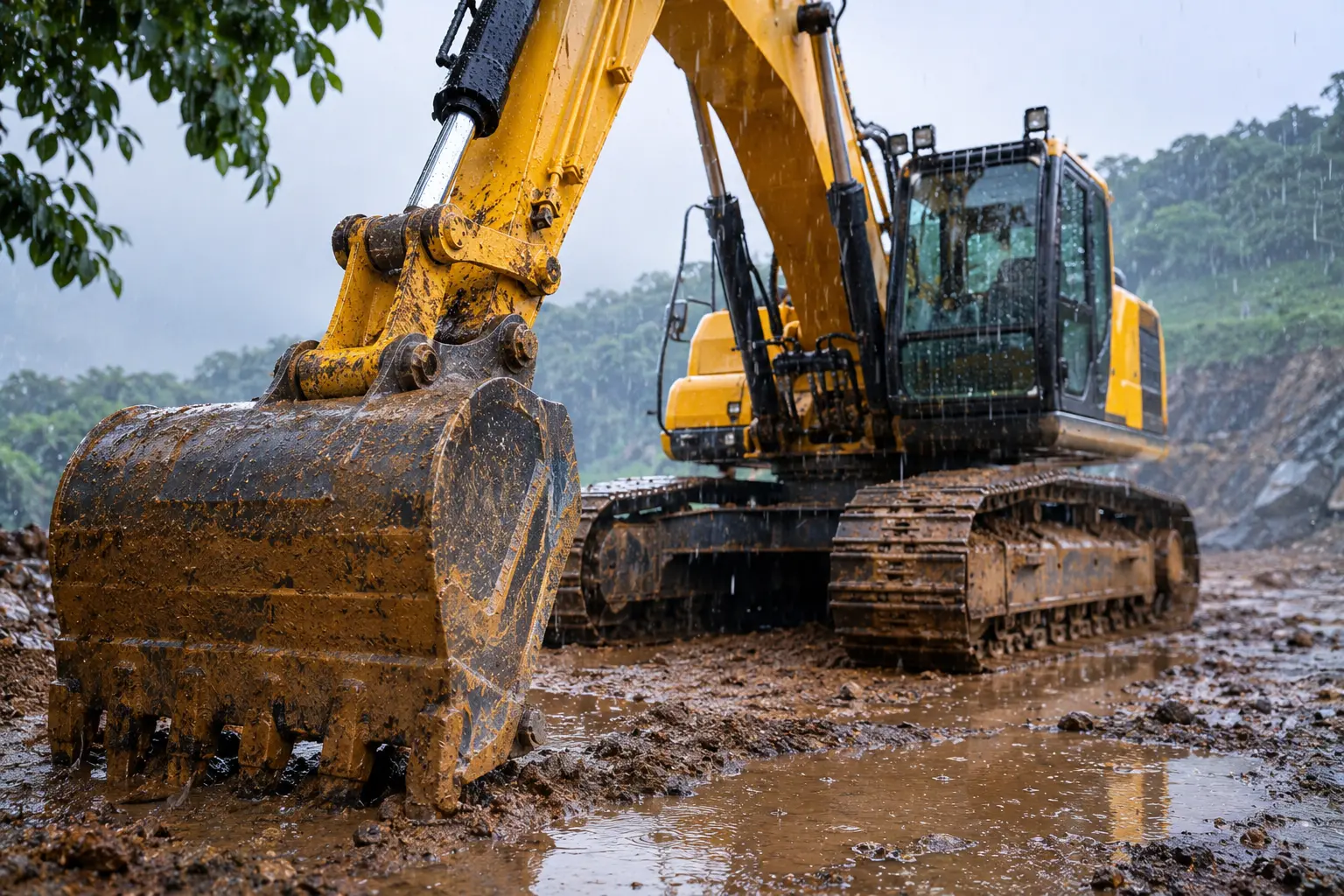
The same machine faces three different jobs in a year. Wet months, dry and dusty months, and hot months each stress different parts. A routine that works in one season can miss the problems of the next.
This guide sets out seasonal care for heavy equipment wear parts. It covers what each season does, which parts are affected and what to check. A good time to begin is four to six weeks before the conditions change.
1. The Season at a Glance
| Season | Main risk | Parts most affected | Focus |
|---|---|---|---|
| Monsoon | Moisture and corrosion | Undercarriage, pins, exposed steel, grease points | Keep metal clean, dry and greased |
| Dust | Abrasion | Bearings, rollers, joints, filters | Clean often, protect moving parts |
| Heat | Heat and pressure | Tyres, rubber parts, bucket and breaker joints | Check pressure, grease and cooling |
2. Monsoon: Moisture and Corrosion
Rain brings mud, and mud brings the packing problems covered in Terrain and Undercarriage Wear: Rock, Sand, Mud and Slopes Compared. Moisture adds a second problem. It can remain on exposed steel and cause rust to form.
A machine that works through the wet and then stands idle is at risk. Water collects in joints and on surfaces, and corrosion can begin on exposed metal.
- Clean the undercarriage thoroughly after wet work, and let it dry where possible.
- Grease the fittings and pivot points, because water exposure can wash lubricant out of joints.
- Inspect for corrosion on exposed steel, and treat it early.
- Use manufacturer-approved mud flaps or splash guards where available for the machine.
- Drain water separators where fitted, and follow the manufacturer’s instructions for fuel-system maintenance and condensation control.
For the daily cleaning routine, see How to Extend Undercarriage Life: Operating Habits That Cut Downtime.
3. Dust: The Slow Abrasive
Dust is fine, hard and everywhere in dry months. It works into bearings and joints and wears them from the inside. It also settles on the machine and blocks airflow, which can lead to overheating.
- Check the air-filter service or restriction indicator more frequently in dusty conditions. Clean or replace the filter only as permitted by the manufacturer and according to the machine’s service instructions.
- Set a regular cleaning schedule, so dust does not build up on coolers and frames.
- Inspect more often, because dust damage is gradual and easy to miss.
- Use covers or enclosures where possible to keep dust off sensitive parts.
Listen as the ground dries out. New squeals can appear when moisture is gone, and Excavator Track Making Noise? Common Causes and What to Check explains what to look at.
4. Heat: Pressure and Perishables
Heat affects more than the engine. Tyres run hotter and their pressure rises. Rubber parts can crack in strong sun. High temperatures affect lubricant behaviour, so use the lubricant grade and service intervals specified by the manufacturer for the expected operating temperature.
- Check tyre pressure when the tyres are cool, and inspect them for heat damage.
- Use the manufacturer-specified grease for the operating temperature, and service bucket and breaker joints at the required intervals.
- Check coolant levels and radiator condition using the manufacturer’s procedure and only when the machine is safe and sufficiently cool.
- Look at rubber parts and hoses for cracking.
- Monitor machine-temperature indicators and warnings during hot conditions, and follow the manufacturer’s operating limits. Protect idle machines from prolonged exposure where practical.
Heat is also a factor in the choice of tyre type on long hauls. See Tube vs Tubeless Off-Road Tyres: Which Suits Your Site? for how each type handles it.
5. Blades, Buckets and Teeth Through the Seasons
Cutting edges, end bits and tooth points follow the ground. When the material changes with the weather, for example from wet clay to dry, gritty soil, the wear rate can change with it.
So check edge and tooth wear more often when the ground changes, and have replacements on hand before the busiest weeks.
6. Tyres Through the Seasons
Tyres feel the weather directly. Heat raises the pressure inside the tyre and speeds up wear on the rubber. Wet ground and mud change how the tread grips and what it picks up.
Check pressure when the tyres are cool, because a warm tyre reads higher. Do not release air from a hot tyre merely to bring it down to the specified cold inflation pressure. Use the pressure your tyre maker specifies for the load, and look at the tread and sidewalls at the same time.
7. Signs a Season Is Hurting a Part
| What you see | Likely season | What to check |
|---|---|---|
| Rust on pins, bolts and exposed steel | Monsoon | Clean, treat and re-grease the area |
| Gritty or scored joints, clogged coolers | Dust | Clean, check filters and look at joint wear |
| Cracked rubber, tyres running hot | Heat | Check pressure, cooling and rubber parts |
If you see any of these, deal with the cause before it spreads to the parts beside it.
8. A Simple Seasonal Calendar
| When | What to do |
|---|---|
| 4 to 6 weeks before the rains | Check the undercarriage, seals and grease points. Stock mud-season parts. |
| After the rains | Clean thoroughly, look for corrosion, re-grease and check for packing damage. |
| Before the dry months | Check air-filter service indicators, cutting edges, teeth and rollers, and inspect the machine for dust-related wear. |
| Before the hottest weeks | Check tyres, cooling, rubber parts and bucket joints. |
Adapt the dates to your region. The point is to look ahead of the change instead of reacting after it.
9. Plan the Parts Before the Season
Seasonal wear is easier to handle when the parts are ready. Review the wear on rollers, idlers, sprockets, edges and teeth during the quiet weeks. Order what is close to its limit before the busy period starts.
That reduces the risk of an avoidable delay if a part reaches its limit during the busy period.
10. Record What Each Season Costs
At the end of each season, note which parts wore out, which sites caused it and what the weather was like. After a year or two, the record shows your own pattern. It tells you which parts to stock before the rains, and which to stock before the dry months.
Idle machines need attention too. Cover them where possible, grease the joints and clean off any wet material before parking them for a long period.